Trusley Solar Farm
Last updated 21st May, 2026
Contents:
Background
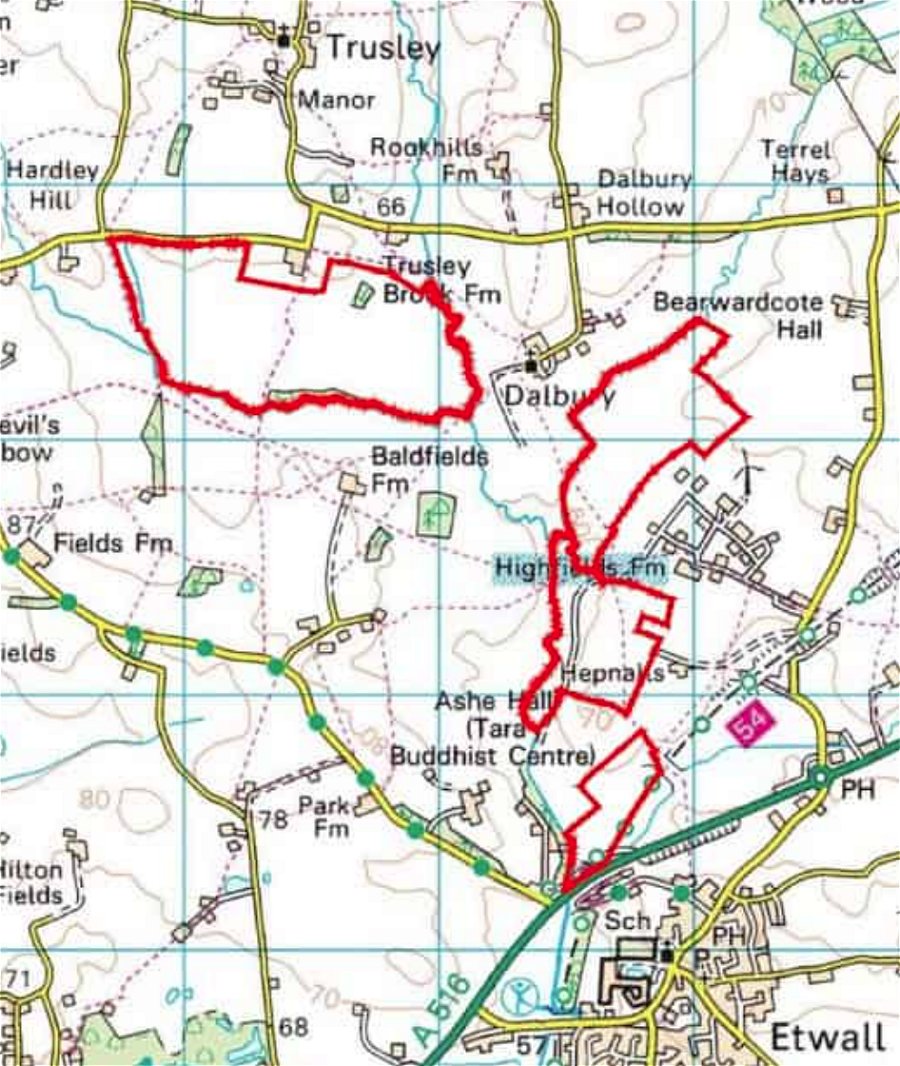
On May 1st, 2026 Castle Way Energy provided details of a proposed solar farm in Trusley covering most of the land associated with Goldhurst Farm.
Opinions vary
This page does not express an opinion one way or the other about the proposed solar farm in Trusley civil parish - it merely lays out the facts as we know them so far.
Concerns expressed so far
Those living in Trusley have raised the following concerns so far:
- Food security is as important as energy security - solar takes good agricultural land out of food production. 164 acres could grow up to 650 metric tonnes of wheat which could be used to make over a million standard loaves of bread.
- If 164 acres of solar generates less energy than a single North Sea wind turbine why don't we build more wind turbines instead of consuming farming land?
- How is the cost of removal and restoration to be guaranteed?
- Are tenants being treated fairly?
- A Battery Energy Storage System (see below) is an eyesore. If it is in Trusley can it be located out of sight?
- The existence of the National Grid substation at Willington seems to be used as an excuse for covering South Derbyshire with solar panels.
- Are people doing this for genuine societal reasons or are they just out to make a fast buck?
- How will footpaths and hedgerows be maintained?
- Will the income be used for the restoration and maintenance of the decaying properties on the Trusley Estate?
The proposed site in Trusley is one of several in the area.
We understand that negotiations have been going on for almost two years but it has only now been made public.
Castle Way Energy has offered to attend a Trusley meeting to present their plans. No meeting has yet been arranged.
Farmers are divided over solar farms. Landlords see it as a 10 to 30 times windfall increase in rent (after removing the current tenant on the land), owner-farmers see it as as a secure income in an insecure agricultural market - renting out part of their land enables them to continue farming on the rest.
Click the image below for a larger version from the Castle Way Energy web site.
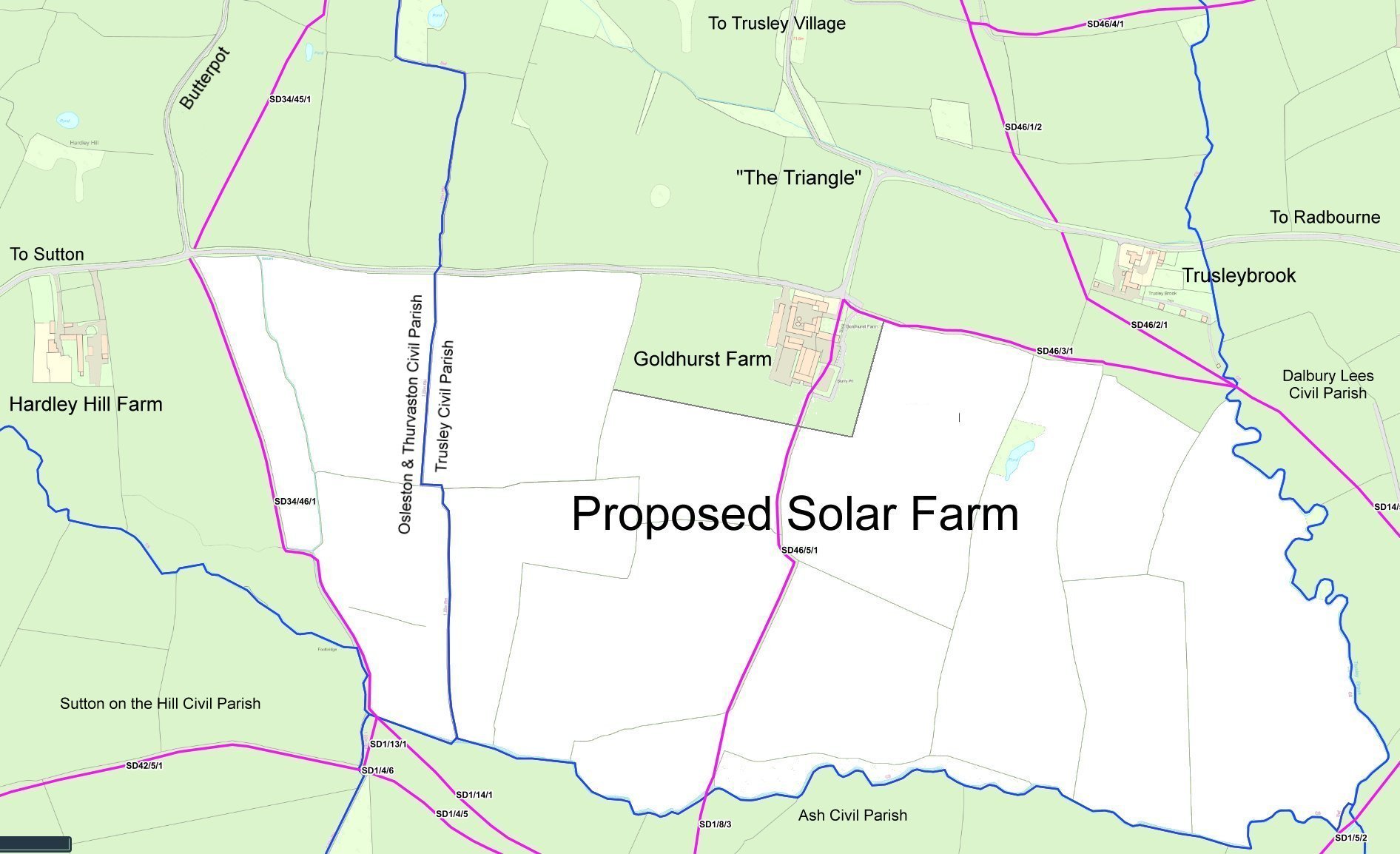
Click the image below, and go full screen, for a larger version showing footpaths (purple) and civil parish boundaries (blue).
Note: the western part of the site is in Osleston and Thurvaston civil parish.
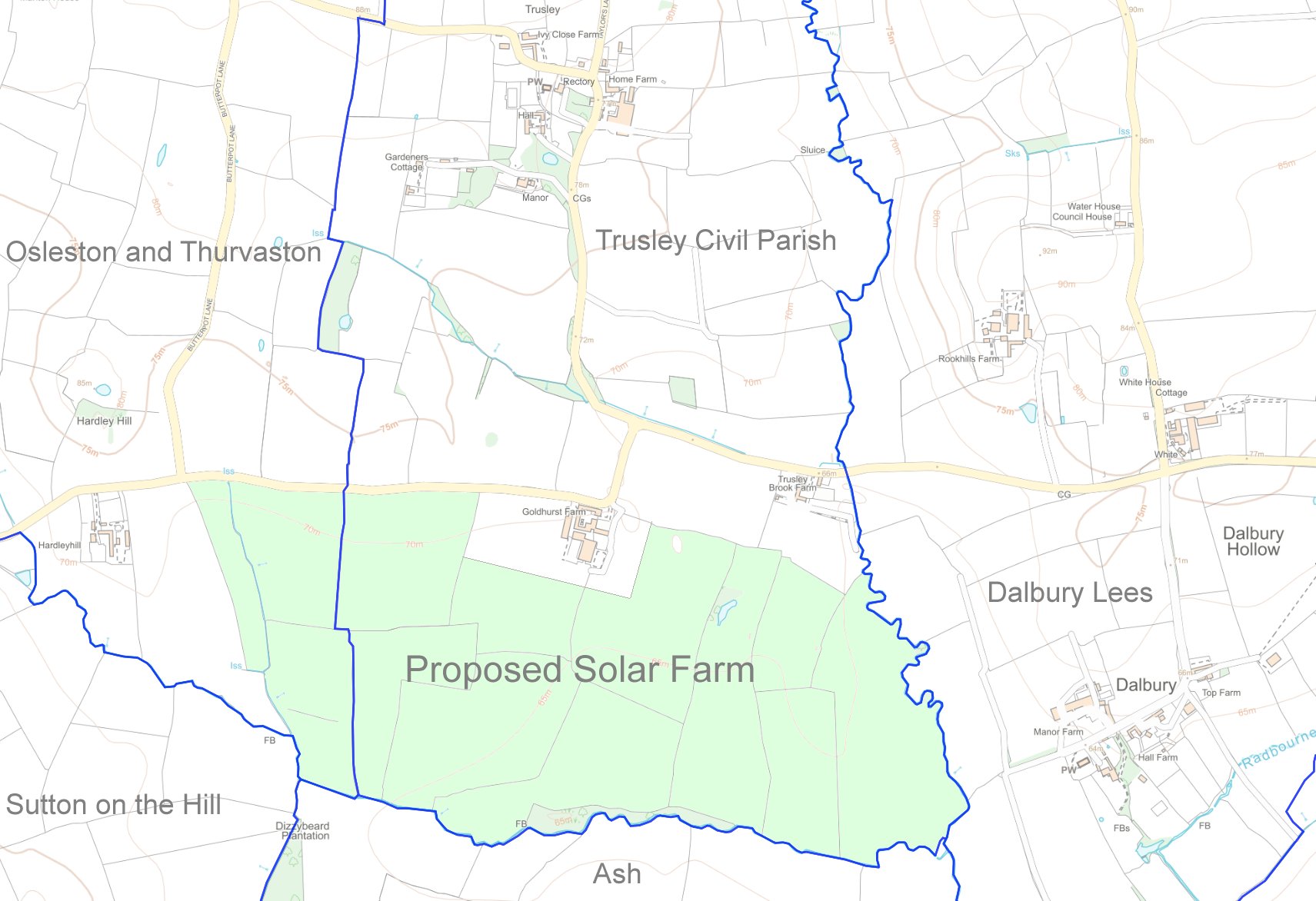
Click the image below, and go full screen, for a larger version showing the proposed site in relation to Trusley village.
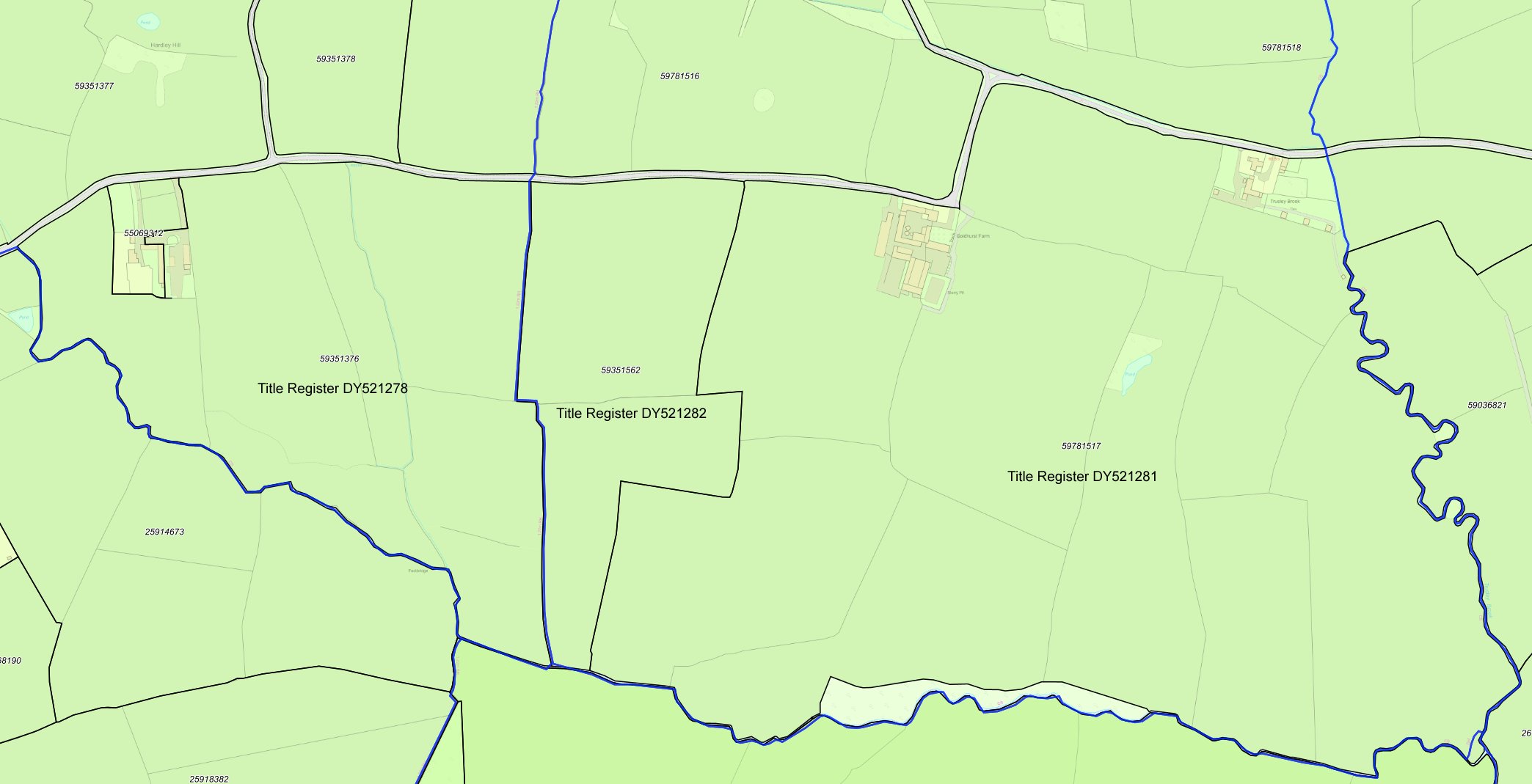
Click the image below to see details of land holdings within the solar farm area.
The "Title Register" numbers are the entry numbers in the Land Registry. The smaller numbers above them are "Inspire Ids" used to identify "Cadastral Parcels" for mapping.
The three holdings, DY521278, DY521282 and DY521281, are held by members of the Coke-Steel family and the "Hardley Hill Discretionary Settlement" (a trust managed by Mather Jamie of Loughbrough).
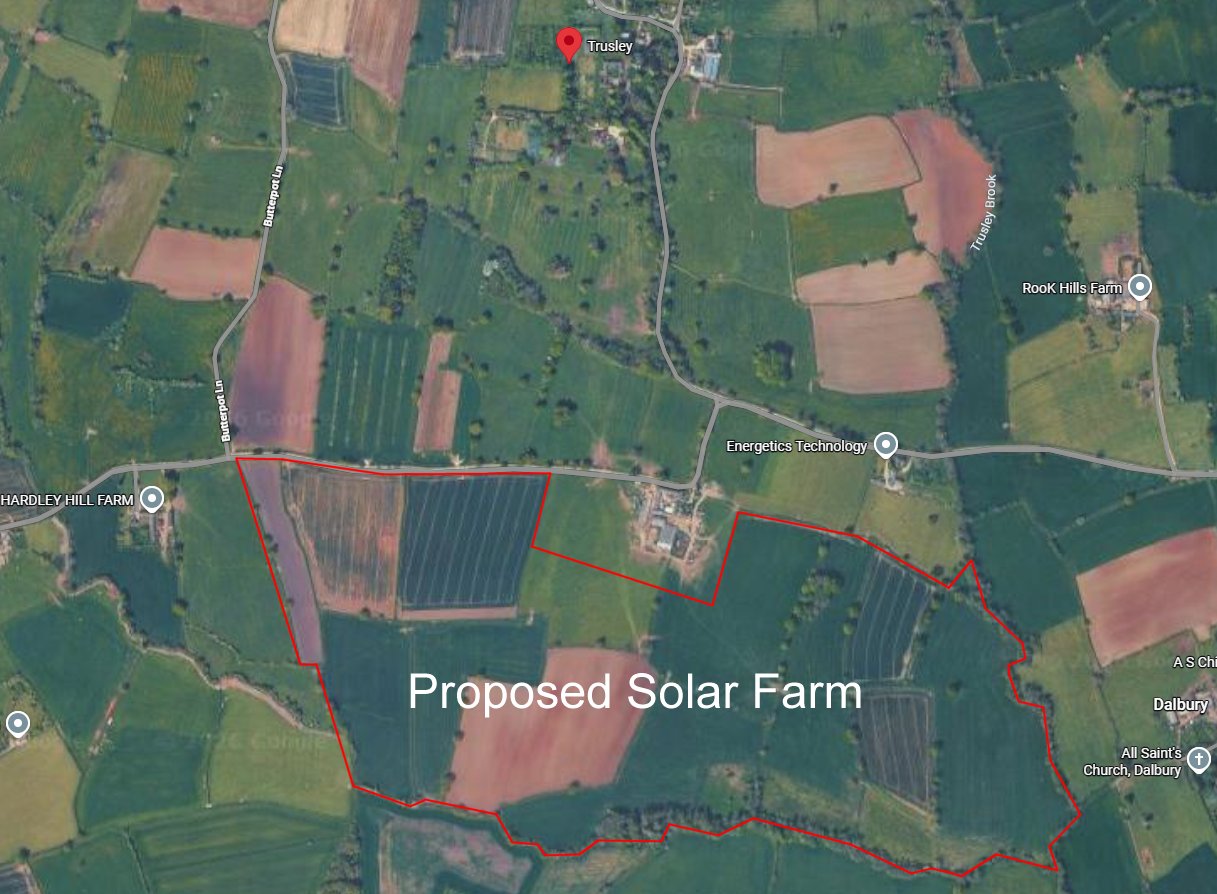
Click the image below for a larger version showing a satellite view.
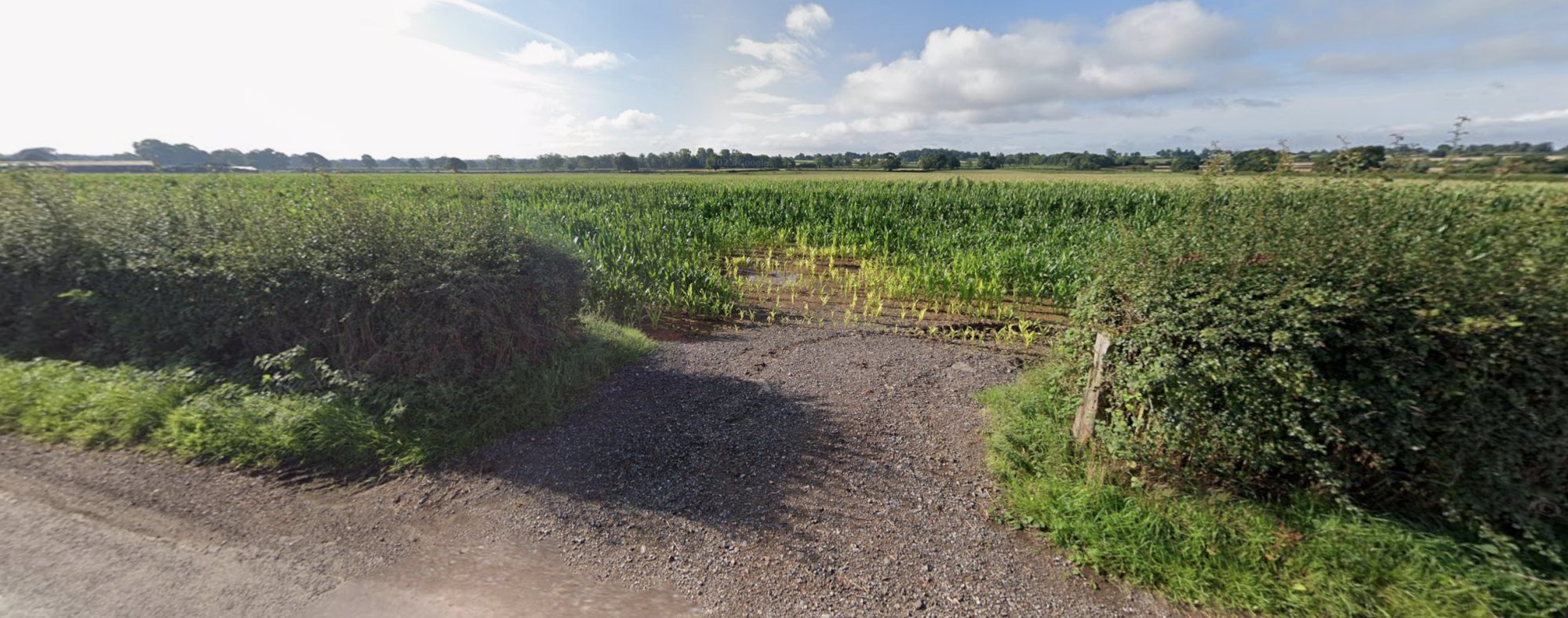
Click the image below for a larger version of the view, with crops, from opposite the Pumpkin Patch.
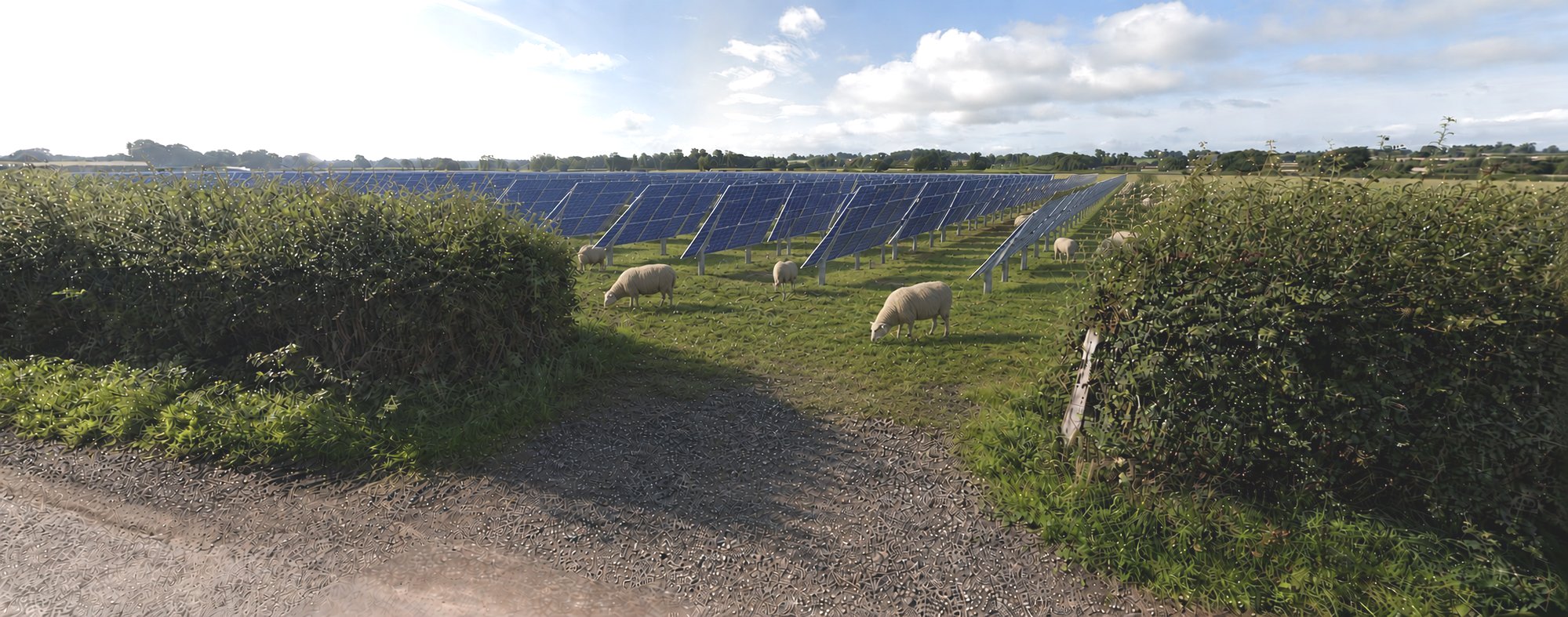
Click the image below for a larger version of the same view with solar panels.
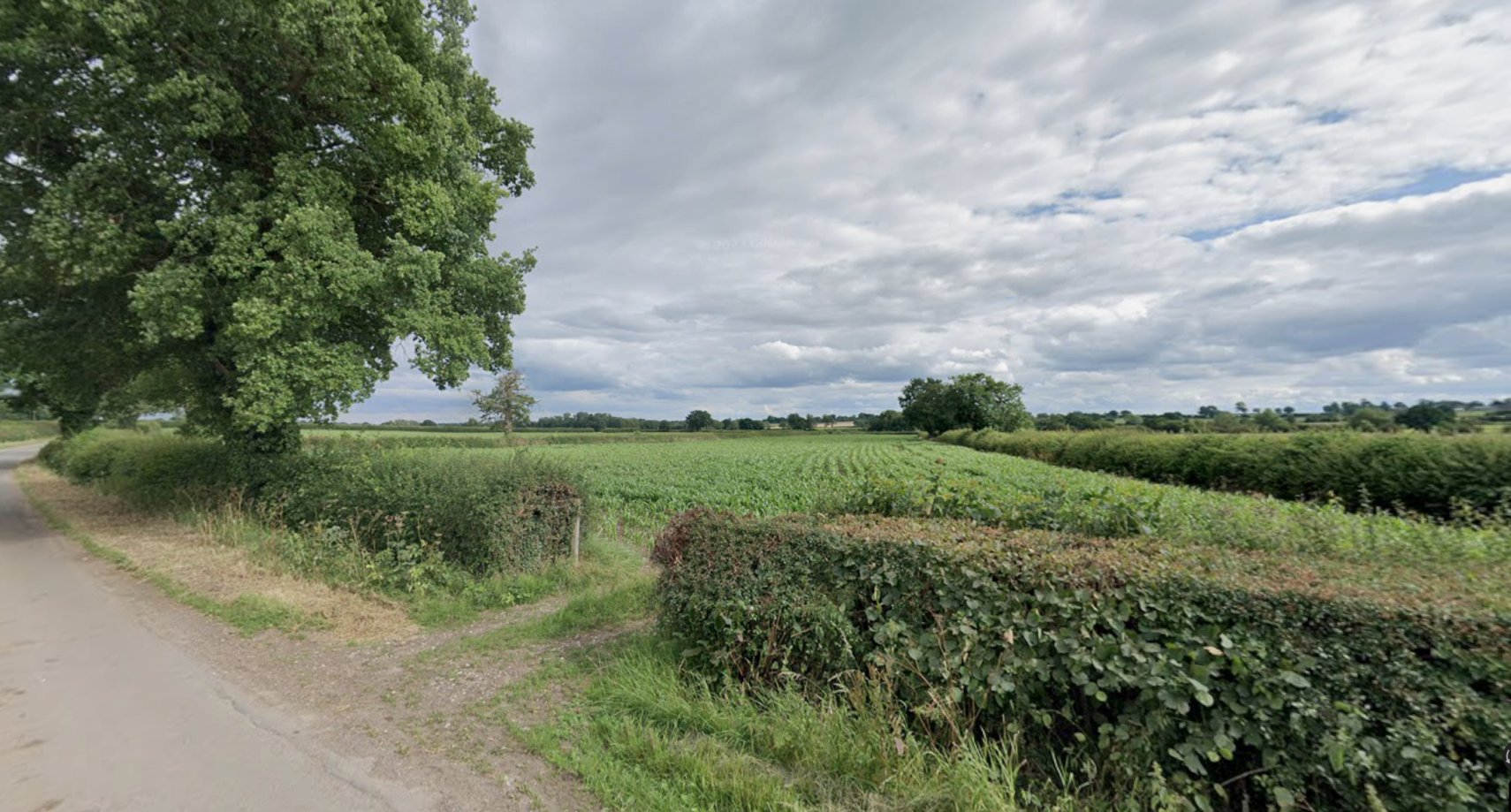
Click the image below for a larger version of the view, with crops, from the end of Butterpot close to Hardley Hill.
Click the image below for a larger version of the same view with solar panels.
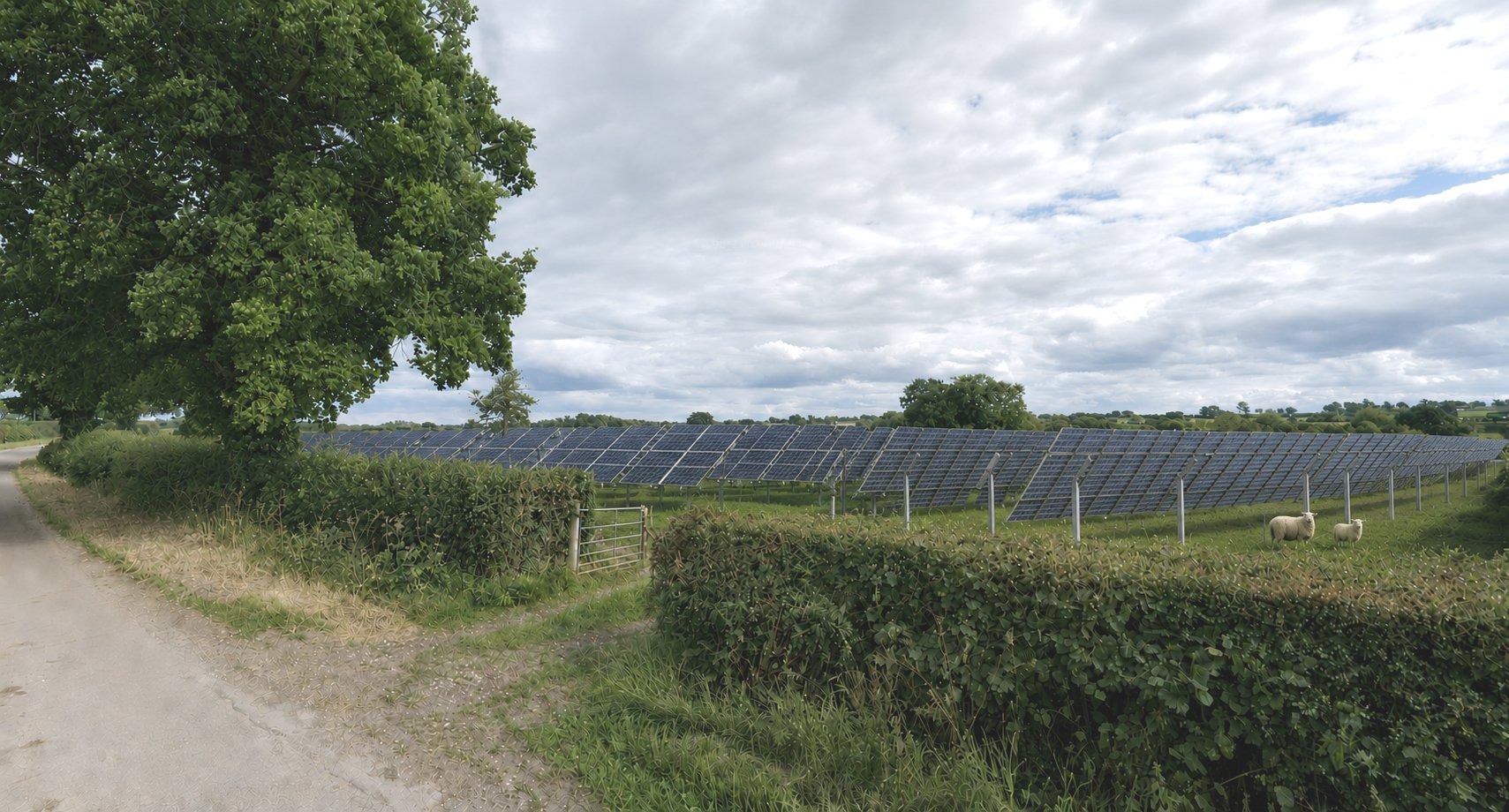
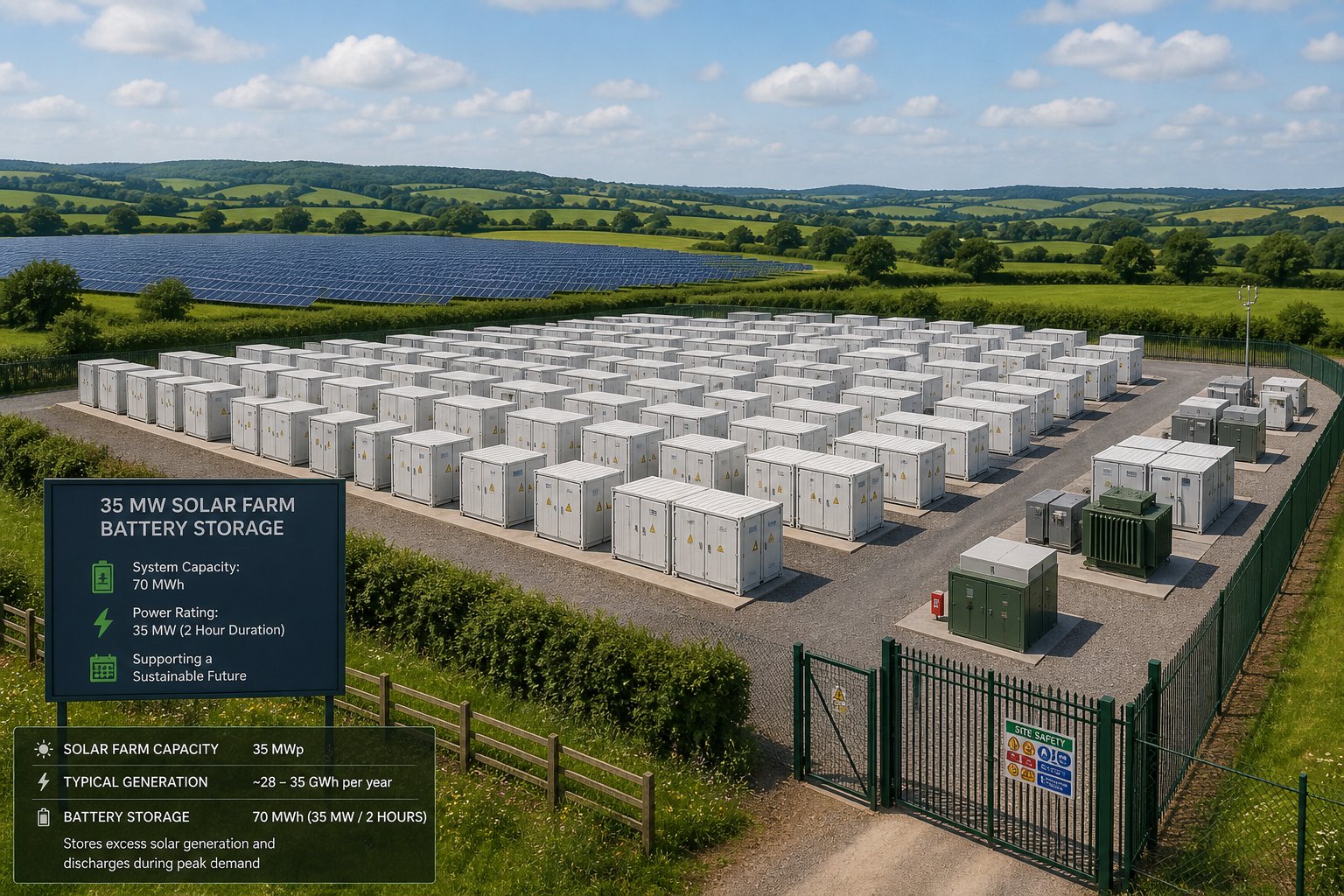
The proposal includes battery storage and we don't know if this will be in Trusley or elsewhere. Battery storage systems have a life of between 10 and 15 years so will probably require replacement during the life of the solar farm. The image below shows typical storage for a 35MW (150 acre) site.
The Castle Way Energy web site states:
"The location of the Battery Energy Storage System (BESS) is still under consideration and forms part of the ongoing design and technical assessment work. It is likely it will be within the area defined on the map,"
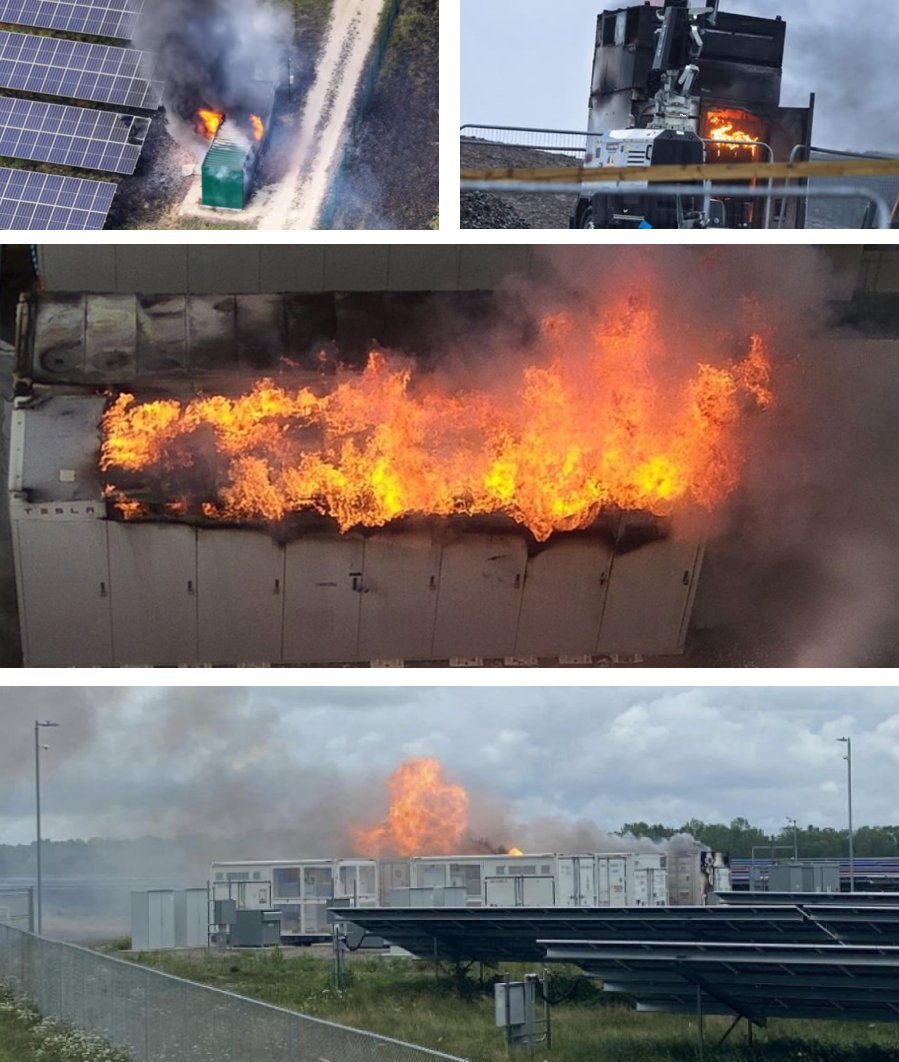
Lithium Ion battery fires are usually caused by over heating, over charging or electrical shorts. They are notoriously difficult to put out because they burn at very high temperatures, they are self-sustaining (they provide their own source of oxygen), they create runaway (one burning cell causes the next to ignite etc.) and they cannot be put out with conventional fire extinguishers.
Firefighters need access to large quantities of water to extinguish flames and to keep the system below ignition temperature because they tend to reignite spontaneously - minutes, hours or even days after they appear to be out. In many cases the decision is taken simply to allow the fire to burn itself out while keeping nearby structures cool.
They also generate highly toxic fumes - so be prepared to evacuate if you are downwind of a storage site!
The UK fire service responded to one solar panel fire every two days in 2024 and there have been 17 fires at solar farms.
The photographs below are from real solar farm fires.
What we know about the site
Note: information has been gathered from the Castle Way web site, from correspondence with Castle Way, from elsewhere on the internet and from current Companies House records. We are happy to change anything that is incorrect.
- The site in Trusley will occupy about 164 acres of land associated with Goldhurst Farm. Most the land is currently arable and used for growing food.
- Castle Way Energy tell us that the Battery Energy Storage System (BESS - see above) will be within the area on the map but it doesn't say where - so it could be in Trusley.
- The solar farm will have to be linked to the National Grid at Willington. This will be by overground (pylons) or underground cables.
- The Trusley site is part of about 900 acres Castle Way Energy proposes to develop in the northern part of South Derbyshire.
It is anticipated that the entire project will generate 300MW of energy with battery storage for 200MW.
Based on similar sized projects elsewhere the Trusley site is likely to generate between 30MW and 35MW of energy, depending on panel layout and any area taken up by battery storage.
- The 164 acres in Trusley will generate less electricity per year than a single modern North Sea wind turbine.
- A rectangular area has been cut out of the solar farm to allow for Goldhurst Farmhouse.
- Goldhurst Farm is currently tenanted. If land is required for non-agricultural use landlords can terminate tenancies fairly easily - for example, using the Case B section of the 1986 Agricultural Holdings Act which normally provides secured tenancies with right of succession but can be terminated on 12 months' notice after planning permission is granted for non agricultural use. Tenants can claim compensation - up to a maximum of 6 years' rent.
The landlord may offer alternative land so the tenant can continue farming.
The tenant, or others, may be offered the opportunity to graze animals, usually sheep, on the solar farm to keep the grass down. This is a difficult legal area because it implies that the land is not exclusively for non-agricultural use - in which case the Case B notice may be open to challenge. However, recent court decisions have ruled that solar farms may have dual use without invalidating the Case B notice.
Castle Way Energy's claim "Solar cuts costs for farmers by providing a direct and long-term revenue stream, ensuring that farms remain profitable for future generations" does not apply in the case of Goldhurst Farm.
64% of total farmable area in England is tenanted but the landlord gets the windfall rent from solar, not the working tenant who may be evicted from all or part of the land to make room for solar.
About 15% of solar farms do not go ahead after planning permission is granted. Costs have risen dramatically in the last few years so developers may go broke or decide it is too expensive and will no generate sufficient return - especially when the tie to gas prices is removed. The question then arises: "what happens to the land?" Does the original tenant have a right to recover the tenancy? This is a legal minefield and any tenant needs to take this possibility into account during negotiations.
- The final decision to go ahead or not is not in the hands of local people, local politicians or local councils. The decision will be made by national government and, in almost all cases, local opposition has been overruled by national government. If the decision is made to go ahead it will probably take between 6 and 12 months to build.
- Land use: solar farms in the UK currently take up about 0.6% of farmland and 0.1% of overall land areas - about the same amount of land area as golf courses. Maybe we should put solar farms on golf courses?
- High energy costs: the UK has some of the highest energy costs in the world - UK industry is paying between four and five times what its competitors pay in the USA.
The reasons are simple - bad or corrupt political decisions, lack of long term strategy and lack of investment in our energy infrastructure.
When the energy industry was privatised by the Conservatives in the early 1990s, the government wanted to ensure that private companies could make good profits so it tied the cost of electricity, from whatever source, to the market cost of gas.
This means big returns for solar and wind because their operating costs are far lower than the cost of energy generated from gas.
The current government levies a tax on such excess profits and is trying to move away from the link to gas in favour of fixed price contracts for the supply of energy. This falls a long way short of using the lowest cost energy available at the time (which would benefit the consumer) though it will mean that solar and wind projects will not make the excess profits they have enjoyed so far.
- Footpaths: there are three footpaths on or close to the proposed site - they are shown on the map at the top of this page.
- SD34/46/1 runs north to south outside the western boundary close to Hardley Hill.
- SD46/5/1 runs north to south through the middle of the site from Goldhust Farm.
- SD46/3/1 runs west to east outside the northern boundary from Goldhurst Farm to Dalbury.
Footpaths are normally retained when solar farms are built. In the case of the one running south from Goldhurst Farm it will have existing field boundaries and hedges on the left and probably fencing, or a new hedge, on the right.
- Financials: we don't know details of negotiations and agreements between Castle Way Energy, the land holder and the tenant. We have used figures from other sites in the country and assumed a 164 acres site generating between 30MW and 35MW of energy with a 2 acre Battery Energy Storage System (BESS).
Figure are per year and index linked.
- Option payments: these are non-refundable and paid to the land holder before planning permission is granted They give the developer exclusive rights for a specified period - usually 2 to 3 years.
2 acre BESS: £20,000 - £40,000 p.a.
164 acres solar farm: £16,400 - £82,000 p.a.
- Lease payments: these are paid to the land holder after planning permission has been granted.
2 acre BESS: £20,000 - £40,000 p.a.
164 acres solar farm: £139,400 - £221,400 p.a.
- Other payments: the land holder may negotiate a share of the revenue generated by the solar farm This can bring the income up to £1,500 per acre per year. So, including the £40,000 from the BESS, the total for 164 acres could be as much as £280,000 in the first year.
Total rent over 40 years, assuming it is index linked at 3%, would be £21,112,352. At 4% it would be £26,607,144.
- Option payments: these are non-refundable and paid to the land holder before planning permission is granted They give the developer exclusive rights for a specified period - usually 2 to 3 years.
Interesting thought
Our current taxation system, particularly Council Tax, is grossly unfair. MPs and others, across the political spectrum, have proposed that Council Tax be replaced by Land Value Tax. All land in the UK is owned by us as a society through The Crown (the state) which is why when we purchase property we own the bricks and mortar but we "hold" the land through "freehold". We can become land holders but we can never become land owners. This has been the case since the French invasion of 1066. Land Value Tax can be seen as a rent society charges for the privilege of using its land.
Land value changes depending on where it is and what it may be used for. In the case of a solar farm, once society gives permission for a change of use, the land increases in value when a lease is signed with a developer. This increase in value is reflected in the windfall rent the land holder charges the developer. Part of that increase in value would be captured for the benefit of society through Land Value Tax.
After 40 years, if and when the land returns to agriculture, the value may fall - in which case the amount to be paid as Land Value Tax would also fall. That's why Land Value Tax is seen as simple, fair and impossible to avoid.
- Decommissioning: the land has to be returned to agricultural use after 40 years and this will involve removing all above ground equipment, breaking up and removing thick concrete pads and removing steel piles which will have been driving deep into the ground. There is no guarantee that the companies concerned will still be in business by then since they are all fairly new. Even the biggest companies can fail - Carillion collased in 2018 with between £1.5 billion and £2.0 billion of debt leaving the state to pick up the mess.
Given the dramatic increase in development costs over the last few years, and the long-term economic chaos (or recession or worse) resulting from the Israel/USA decision to attack Iran, there is the possibility that developers may go broke while building new solar farms.
Developers must arrange a surety bond or pay into an independently managed fund to cover the cost of restoration at any stage of the project and this must be established before building starts.
- We don't know if the land is grade 3a or 3b. National infrastructure projects like this are supposed to avoid grades 1, 2 and 3a land - the only way to find out the grade is to test it.
- We don't know if hedges will remain or be grubbed out. The company states:
"We are committed to designing the scheme to complement the surrounding area. We will seek to retain as much of the existing trees and hedgerow as possible, and where beneficial, there will be landscaping improvements, including screening, to minimise visual impact and strengthen landscape character and structure. A detailed landscape and biodiversity enhancement plan will be included with the planning application."
- It also says: "Brockwell aims to bring localised benefits to the area by working with those local communities hosting this project through offering a Legacy Fund. Brockwell Energy will seek views on how this Legacy Fund could be delivered, including different options for the distribution of this funding in our statutory consultation."
"Legacy Funds" are also called Community Benefit Funds and are usually based on an agreed index-linked amount per MW per year - the proposed Trusley solar farm will probably be between 30MW and 35MW. These funds are independent of the windfall rent enjoyed by the land holder and are not paid to individuals or used to increase the asset value of the land holder. They may be used by the local community for specific projects. Examples may be found here and here.
What we know about Castle Way Energy
The information below is public domain and comes from following trails starting with records at Companies House. We are happy to change anything which is incorrect or out of date.
Cayman & Guernsey Tax Haven Solar Farm
To reflect the ultimate ownership of the developer perhaps we should call it the Cayman & Guernsey Tax Haven Solar Farm? The more money people make, the more they spend to avoid their social responsibilities.
- Castle Way Energy is a project or trading name of BSSL Derbyshire 1 Ltd which was created in 2024.
- BSSL Derbyshire 1 Ltd is one of at least 16 similar “BSSL” companies registered at Companies House.
- All the BSSL companies are subsidiaries of Brockwell Energy.
- Brockwell Energy Limited was created in 2017 and is wholly owned by Brockwell Energy Group Limited.
- Brockwell Energy Group Limited is 85% owned by Lantern Midco Limited.
- Lantern Midco Limited has been renamed as Brockwell Holdings Limited.
- Brockwell Holdings Limited is 100% owned by Lantern Holdco Limited.
As of 15th May, 2026 Lantern Holdco was late in submitting its accounts and on 3rd February, 2026 had a notice of compulsory strike-off against it. The strike-off was discontinued on 14th February.
The directors' report in the company's 2024 accounts makes for interesting reading. Follow the link and search the page for the "Group of companies' accounts" filed on 13th June, 2025.
- Lantern Holdco Limited is owned by:
- Drumwood Capital Designated Activity Company. This is registered in Ireland but is also registered in the tax haven of the Cayman Islands which has 0% corporation tax.
- Harp Investments ICAV, registered in Ireland, acting for and on behalf of its sub-fund DKOF VI Oakview sub-fund which is controlled by Davidson Kempner based in the USA..
- Pioneer Lantern Investments IC Limited. This is registered in the tax haven of Guernsey which has 0% corporation tax.