
Bench Boots
A good quality garden bench is a major investment - and it needs looking after!

What do sheep and garden benches have in common?
They both suffer foot-rot in our wet and temperate climate.
For those interested: the photos show Herdwick, Border Leicester and Lleyn sheep - and a Lutyens bench.


Protecting garden benches against the elements
Wooden garden furniture will age and, eventually rot - that's just a fact of life. Softwood furniture (which should be painted to help prevent rot) will rot quicker than hardwood.
The Internet shows multiple ways to prolong life but some of them, using organic oils for example, can cause more problems than they solve because organic materials actually encourage the growth of mold and mildew. Some sites recommend an annual service: brushing down, sanding down and applying an oil or sealer. In some cases sealers can result in the highly unsightly build up of material on the surface of the wood - like a flaky skin.
More to the point, how many people actually do this? Sanding down a large bench is very time consuming and, if done badly or half-heartedly, can make the bench look worse, not better.
Other sites recommend letting the furniture grow old gracefully - like the rest of us!
Bench feet will rot - especially if they stand on wet surfaces. Placing the bench on a hard surface helps but, even then, water will pool between the foot and the surface - as you can see by lifting a bench leg after rain.
Rotting feet means removing part of the leg, making a short replacement section, or buying a new bench!
Bench Boots help to prevent foot-rot
Bench Boots:
- lift feet away from surface water: on grass, slabs, concrete or gravel,
- prevent pooling by allowing water to drain away from the feet,
- withstand a weight of over 1 ton per foot.
Bench Boots are designed to do the job they claim to do and to be simple to manufacture. "Design For Manufacturing" means tooling and run-on costs will be as low as possible.
Bench Boots are stackable with a large surface area underneath to spread the load.
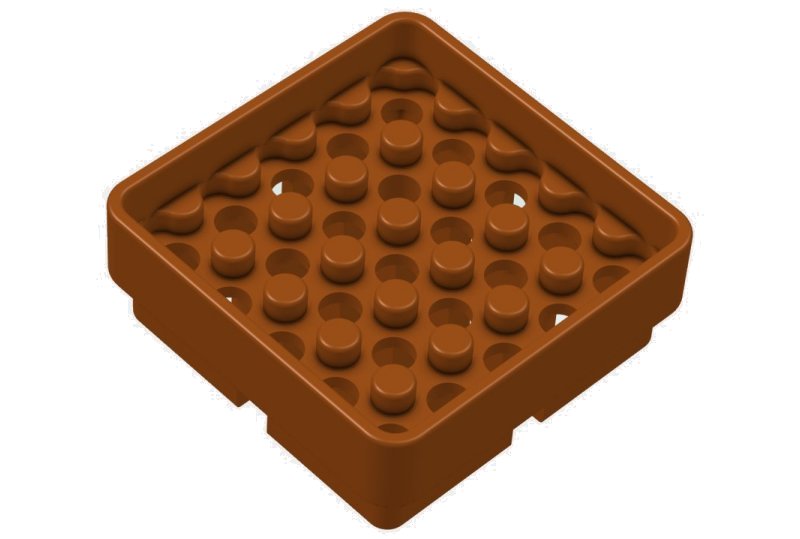
The photo below shows two 3D printed prototypes - production Bench Boots may be any colour.
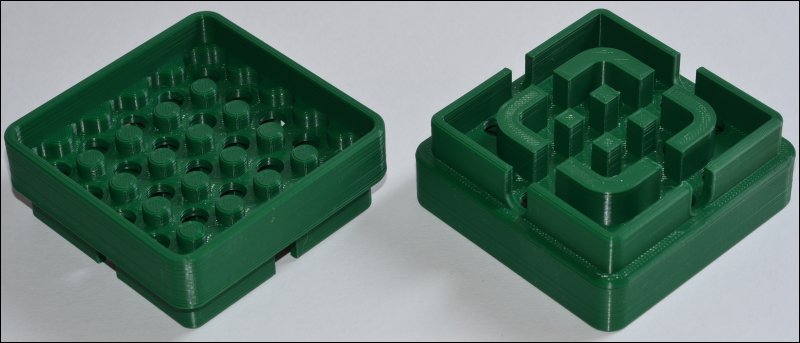
The unique design of the top of the Bench Boot ensures that water runs away quickly with no risk of pooling around the feet.
The design of the underside spreads the load - helping to prevent the bench sinking into grass or soil.
Bench Boots in action
This first photo show a Bench Boot under a bench leg that has already had at least one foot replacement. Water was pooling between the bottom of the feet and the paving slabs before the Bench Boots were added.
The photo also shows that, prior to the use of bench Boots, rain splatter from the paving slabs has caused dirt and soil to adhere to the bench foot. Bench Boots won't prevent all that, but they will prevent a lot of it.

The damp was already getting into this Lutyens bench by the time Bench Boots arrived.

Despite use of an old roof slate, water was still getting into the feet of this bench. Lifting the legs to place the Bench Boots showed water pooling between the tile and the foot.

Specification
- Style: suitable for bench legs up to 74mm x 74mm. Other sizes possible.
- Colour: any - for example: green, brown or grey.
- Material: hard-wearing ABS.
- Finish: matte texture SPI D2.
- Dimensions: 80mm x 80mm x 30mm (external).
- Weight: approximately 60g per Bench Boot.
Packaging
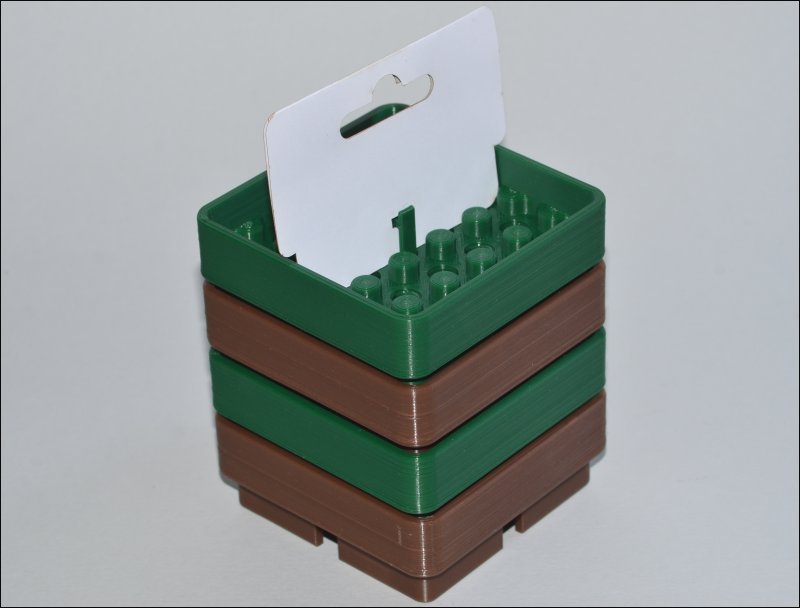
Packaging is simple, effective, low cost and avoids the use of more throw-away plastic. A simple ABS stake passes up through the centre of four Bench Boots. The stake has a clip on top to pass through a hole in the label to hold both the label and the Bench Boots in place.
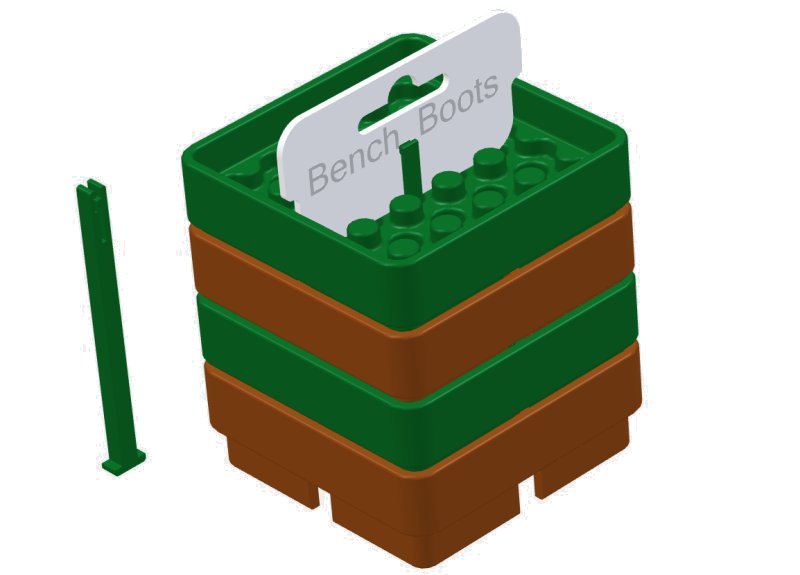
The photo below shows four 3D printed prototype Bench Boots with packaging stake and label.
Bench Boots Lite
This alternative version is simpler in design, uses less material and is easier to manufacture.
The hole in the centre means it can be packaged in the same way.
