A young person's guide to religion

Contents:
- Who invented religion?
- Wishing and praying
- God, belief and religion
- Tabula rasa
- Occam
- Ground rules
- God
- Religion
Who invented religion?
We don't know who first came up with the god idea.
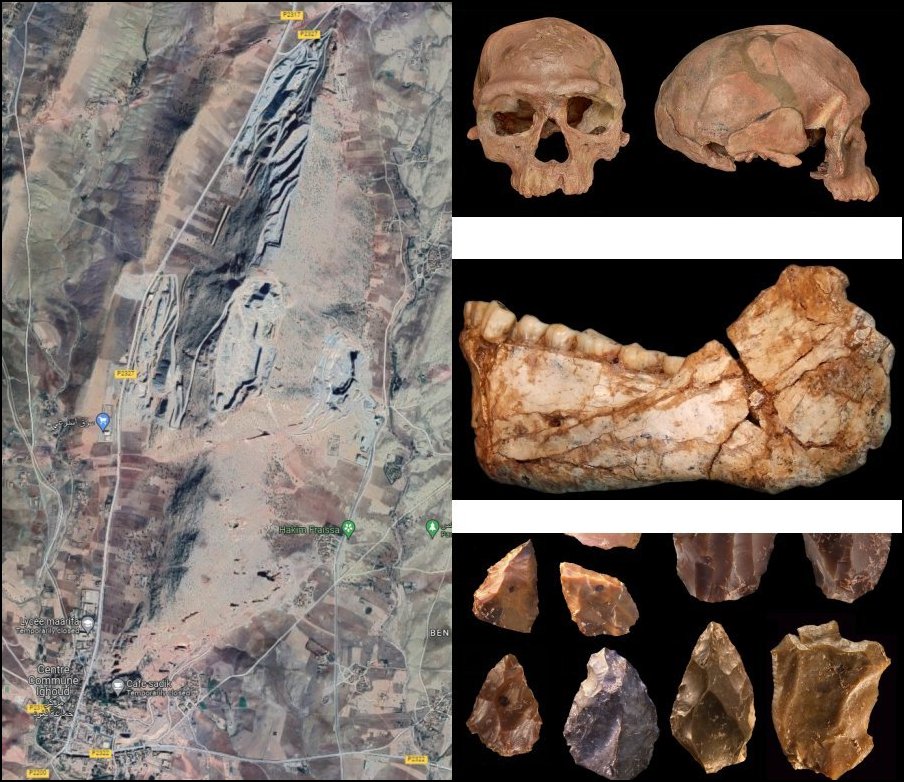
The oldest human fossils (so far) have been found at an open cast mine in Jebel Ighoud, Morocco. The fossils were found along with stone tools and are estimated to be 300,000 years old.
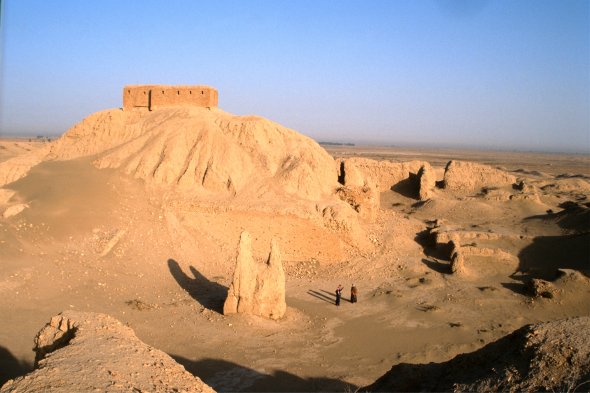
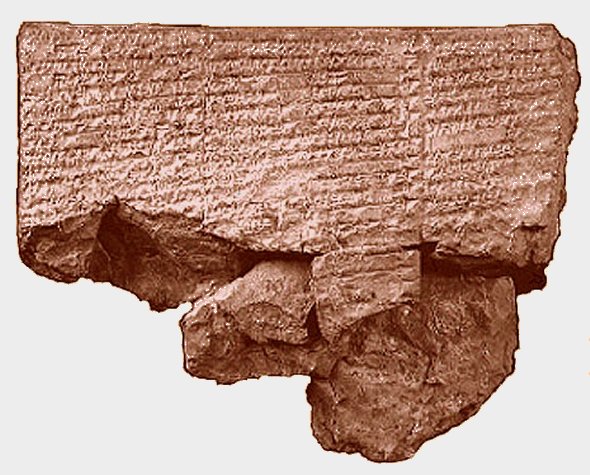
The oldest historical record we have about religion (i.e. something written down) is on a clay tablet from a temple in Nippur in Iraq and it is believed to be about 5,500 years old. The tablet talks about several gods including Nintu, the goddess of creation.
So, we have a gap of about 294,500 years about which we know almost nothing in terms of what people believed.
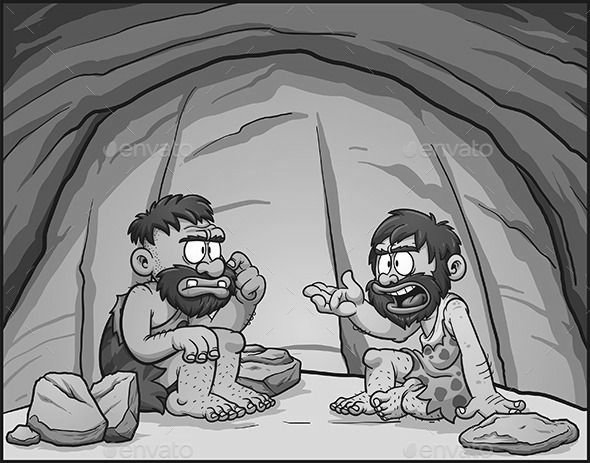
We can imagine two people, sitting down in their cave, talking about the world and asking questions to which they had no answers.
- Why does it rain?
- What is the sun and where does it go when it gets dark?
- What is the moon and why can we sometimes see it during daytime?
- What are the dots of light in the night sky?
- Where do all the animals come from?
- Why does the weather change at different times of the year?
- What makes plants grow?
- If we keep walking, where do we get to?
- What happens after we die?
The world must have been a frightening place when you had little understanding of how it worked.
The animals and plants around them were vitally important for a hunter-gather society - if the weather turned bad, and the animals and plants were in short supply, it would have been devastating for them.
Wishing and praying
All of us sometimes "wish" for things. We wish the weather was better, we wish our friends were kind to us, we wish we could have more fun. Early humans must have wished for things to make their lives easier - for better weather, for success when hunting, for a new baby to survive etc.
There is a big difference between wishing for something and wishing to something.
We don't know where the idea came from to wish to something - to wish to the sky for the sun to rise, to wish to trees so they would grow fruit, to wish to the sky for it to rain. Wishing to something assumes that the something can hear you and do something about it.
At some time, someone must have come up with the idea that thing they wished to must be able to control things in some way, it must be alive but invisible. This was the beginning of ideas about invisible supernatural spirits and gods - so wishing became worship - praying to the gods.
A "theist" is someone who believes in at least one god and we know that the followers of early religions were "pantheists" - they believed in more than one god. The ancient Egyptians had over 1,400 different gods and goddesses while the ancient Greeks had 12 main gods and goddesses who lived on Mount Olympus. The highest mountain in Greece is today called Mount Olympus - but no one who has climbed it has seen any gods on top (of course, they would be invisible).
The first monotheist religion (belief in a single god) was probably Zoroastrianism which began about 3,000 years ago in Persia - modern Iran. In fact Zoroastrianism has two supernatural gods: the good god Ahura Mazda and the bad god Angra Mainyu. Most religions see the world as a conflict between the good and the bad.
"Theist" leads to "atheist" with the "a" meaning "not". Atheists are not theists, they see no need for the god idea and no evidence for it. Atheists are defined by what they are not, not by what they are - there would be no atheists if there were no theists. This also explains why there is no such thing as "atheism" - atheist don't have a set of beliefs, the only thing they share is that they have no need of the god idea to explain things. Some atheists call themselves "humanists" and they do share a set of moral values and a view of the world - but they don't believe in anything supernatural.
God, belief and religion
These three things are often muddled up so our definitions are:
- "God" is a more complicated idea than it first looks. To some people a god is a supernatural thing that created everything. To others it is a supernatural thing that has control over nature - including control over humans.
When someone uses the word "god" it is always worth asking what exactly they mean. In many cases they use words that are equally difficult to define, like "spirit", "ruler of the Universe" and "supreme being". Those are not definitions, they are labels.
- "Belief" means accepting something as a fact - even though there may be no evidence or proof for it. We don't need to "believe" that the sun rises each morning - we have evidence for it and we understand why it happens.
Belief is required for things like "god" - because it can't be proved in the normal way we talk about proof in logic, maths and science.
Many religious people claim that the existence of a god (or gods) can be proved - and people have argued about this for the last 3,000+ years! We have a page covering the classic god arguments.
"Belief" should never be confused with "truth".
Something is "true" if we have evidence and proof for it. For example, it is true that we will all die sometime, that 2 + 2 = 4 (in base 10) and that water is made up of oxygen and hydrogen.
Something cannot be "true" for one person and not true for another. It is either true or not true.
People disagree about the god idea, some people believe it, others don't. The god idea is not a truth.
- A "religion" is usually a set of beliefs (about god and other things) shared by a group of people. Some religions are "organised": they have a set of holy books which define their beliefs, a set of people (usually "leaders", "priests" or "religious scholars") who "interpret" those books and a place where people go to worship their god: a church, temple, synagogue, gurdwara etc.
It is worth pointing out that there are hundreds of different god ideas. Even those people who share the same god idea, and the same religion, may have different interpretations of their holy books - so there are hundreds, perhaps thousands, of different religious groups (called "sects"), each differing slightly from the rest.
There are many people who claim to believe the god idea because they have no other explanation for why things are as they are and perhaps they have a fear of death, but they don't claim to follow any religion. Many of them are embarrassed by things done in the name of religion so they prefer to keep their beliefs private.
We have more about religion below.
Tabula rasa
Tabula rasa is a very useful idea which comes from the Latin language and means "a clean slate" or a "fresh start". The idea is to look at everything with an open mind, without any assumptions or beliefs that may alter how you see things.
Every baby is a tabula rasa, it is a clean slate, it is not born believing in a god or as a member of a religion. There is no gene for Christianity, Hinduism, Islam, Judaism, Zoroastrianism, etc. so there are no Christian, Hindu, Muslim, Judaist or Zoroastrian babies - only religious parents.
We are all born believing in nothing but many of us have our beliefs imposed on us by parents, family, friends, teachers and community. Some of us investigate further and make up our own minds.
Another way of thinking about it is to imagine you are a visitor from a planet in another star system. On your planet you don't have gods and religions but you want to understand why they exist on Earth. So, you have a tabula rasa as far as gods and religions are concerned - you are starting from fresh.
Occam
We would like to introduce you to one of our favourite people: William of Occam. We are big fans of Occam!

William was around in the 13th and 14th centuries - somewhere between 1287 and 1347 - and we think he was born in the village of Ockham in Surrey. He is usually called "William of Occam" rather than "William of Ockham" - names often change over time.
Like most people of his time, William was religious - in fact he was a Franciscan Friar - a type of religious priest.
You may find it strange that a religious priest is one of our favourite people, but, like many religious people at the time, William wanted to think for himself and not simply believe what he was told.
William came up with a brilliant idea to use when finding solutions to problems. It involves getting rid of, or shaving off, all parts of an idea that aren't absolutely necessary to explain something. The idea of shaving things off is why William's idea is called "Occam's Razor".
the one that makes the fewest assumptions and
invents the fewest new ideas."
We love that! Some of us write computer software and we use Occam's Razor every day to keep things simple.
Occam is recommending that we start with a tabula rasa so we can make a fresh start when looking at anything.
Ground rules
Before we start we would like to correct something you may have been told. You have probably been told that "atheists don't believe in a god".
The person writing this page is an atheist and gets very upset about this.
Lots of people don't believe in lots of things but we don't have to label them as "afairyists" if they don't believe in fairies, or "aunicornists" of they don't believe in unicorns or "ahobbitists" if they don't believe in hobbits - that would be silly.
Theists invented the god idea so they are the ones who have to prove it. Atheists haven't invented anything (about religion) so we don't have anything to prove.
That's how we prefer to be defined: "Atheists see no need for the god idea and no evidence for it."
We need some ground rules when we start with a tabula rasa:
- Keep an open mind. Don't grab the first idea that comes along, look at all the possible answers.
- Think for yourself.
- Don't believe everything people tell you - and certainly don't believe anyone that says "it must be true because I say so." People are often wrong.
- Don't believe everything you read in books - and certainly don't believe it when someone says: "it must be true because it says so in this book." Writing something down doesn't make it true.
- Question everything. The word "why?" is one of the most powerful words you can ever use.
Before you accept a new idea you should ask:
- Why do we need this new idea?
- Who thought up this new idea - and why?
- What is this new idea trying to explain?
- What evidence do we have to support this new idea?
- Can things be explained in a much simpler way?
God
- Why do we need the god idea? (We atheists don't need the god idea to explain anything.)
- Who thought up the god idea? (We have no idea - possibly someone living in a cave during the stone age.)
- What is the god idea trying to explain? (It is trying to explain almost everything!)
- Can things be explained much simpler than inventing the god idea? (Yes they can.)
- Why are there so many gods? (We have counted over 2,000 in the world today.)
- If god is so powerful, why doesn't she make her presence known to us all? (Excellent question.)
Did you notice how we referred to god as "she" and "her"?
Why do people almost always refer to their god as "he"?
Should a god be "he", "she" or "it"?
Is a god male or female - if so, why?
Please don't say "because it says so in our holy book" - holy books were written by men!
- In the past many things happened that could "only be explained by god" - these were called "miracles".
Why don't we hear much about miracles today?
In the past people couldn't read and they weren't well educated. Could it be that more people today are willing to ask questions and look for simpler explanations?
For a really hard question, try asking a religious person: "what exactly is a god?"
Religion
- A religion is a group of people who believe in one or more gods - and we know of at least 2,000 gods in the world today. Technically Buddhism isn't a religion because it has no god - it is more a way of life.
- A religion has one or more holy books which define what members must believe and how they must behave. There are hundreds of different religions and hundreds of holy books.
- A religion has religious leaders or religious scholars who study the holy books to decide what they mean.
Religious leaders often lead "prayers" where religious people thank their god for things or ask their god for things.
- When religious people disagree about what their holy books mean, they split to form a new group called a "sect" - part of a religion with slightly different beliefs from other sects. There are thousands of different sects.
A split in a religion is called a "schism" - pronounced "skism".
- Different ways of understanding religious books are called different "interpretations".
"I think it means this, you think it means that."
which is usually followed by:
"I am right, you are wrong."
which, in the past, was sometimes followed by:
"and I will kill you or imprison you if you disagree with me."
It is always followed by a schism as a new sect pops into existence out of nowhere.
Questions:
- If there is only one god why are there so many religions and sects?
- Why is god such a bad writer? Why do religious people disagree about what she wrote?
- How do you judge which sect is right and which is wrong?
The answer is usually:
"my sect is right, your sect is wrong."
Maybe they are all wrong?
Maybe we don't need the god idea at all? (We atheists don't need it.)
Maybe the world would be a happier place without religions? (We atheists are happy without religion.)
Maybe there are other reasons why people join religions? (Family, friends or the social life.)
- Why do people become religious?
- Do young people with religious parents have much of a choice?
- Have you studied other religious beliefs - and non-religious beliefs?
- Do you think religious schools are a good thing? If so, why?
- Do you think young people should be free to decide for themselves what they believe?
- Do you think you have enough information to make a free and informed choice about what to believe?