
Dialogue and debate
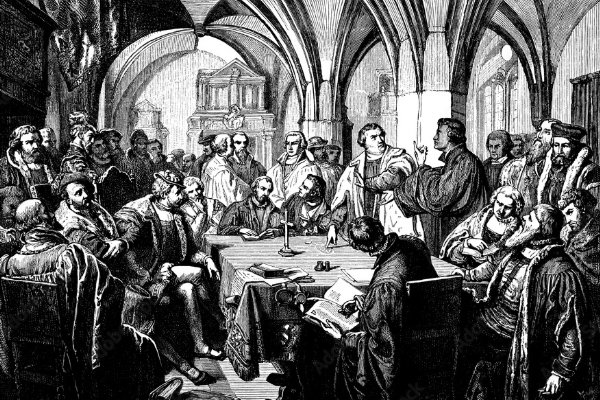
We love a good discussion or debate - we will travel miles to take part in them! Give us a shout - we will be there!
We have engaged with everything including small group chats, panel sessions and formal debates and we have sat alongside priests, imams, rabbis, vicars, scholars and "experts" in schools, universities, meeting rooms, multi-faith centres, village halls, community centres and even churches!
For discussion to be profitable there have to be ground rules - and this can cause a problem for us in three ways: words, holy books and the god assumption.
Words

Dialogue requires a shared public language, not a private language with meaning to only one side. Private languages are an efficient shorthand when used within specialist groups, like doctors or computer engineers, but they become a barrier when used outside the group.
The problem of "meaning"
"The meaning of a word when it leaves my mouth may be completely different when it enters your ear."
Our brains filter everything and we react quickly to what we think we hear. We can build a complete picture, negative or positive, in our minds by hearing a single word but we are poor at holding back, listening carefully to further words, and building a true picture of what is being said.
Dictionaries cease to be of use when words can have entirely different meanings to different people - the words "spirit" and "spiritual" for example, Such words are best avoided when discussing things with us.
The word "spirit" in religion frequently refers to the supernatural - a "soul" - and its closest equivalent for us would be "personality" - the thing that makes you unique and which comes from your genes and your life experiences. Your personality exists within the chemical and electrical processes of your brain and ceases to exist when you die.
It is interesting that "born again" atheists, those who have shaken off the shackles of religion or who kick themselves for having fallen for it in the first place, often use the word "spirituality" while life-long atheists (like the author of this page) don't - we stick to "awe and wonder" of the Universe.
Another example - "need".
When we define the words "theist" and "atheist" (below) we use "need" in the sense of a necessary condition of a rational argument.
However, "need" can imply a personal emotional or psychological requirement - a "neediness" - and some religious people become very upset because they feel it implies they are lacking in some way. A Google search for "why Christians need god" brings up some interesting, and highly arrogant, comments about personal needs.
So, a single word can have at least two very different meanings depending on who uses it.
Our definitions
If you wish to engage with us, it would be helpful to know the meaning we place on certain words.
- Theos: god - from the Greek. (We don't know what a "god" is, but we enjoy listening to people trying to define it.)
- Theist: someone who needs belief in a supernatural god in order to explain things.
- Theism: no such thing since there is no set of beliefs shared by all theists.
- Atheist: someone who sees no need for the god idea and no evidence for it.
- Atheism: no such thing since the only thing atheists share is rejection of the god idea.
- Apatheist: someone for whom religion has no meaning or use in their day-to-day lives. They have given it little thought and don't see any need to label themselves as anything. Their position can best be described as "a plague on both your houses" - though they are overwhelmingly in favour of ending taxpayer support for faith schools.
- Supernatural: something non-physical and beyond rational and scientific understanding.
"Religion"
We define religion as a set of beliefs involving belief in one or more gods and some form of life after death.
However, this is awkward because Budhism is accepted as a religion but doesn't require belief in a god.
Not being able to define "religion" clearly means that almost anything can be called a religion - thus making the word useless in discussion.
On one occasion we sat in on in-service RE training for primary school teachers and when things got under way we suggested that defining what we were talking about, the "religion" in Religious Education, would be a good idea. The person leading the course said: "that's far too complicated and would take up far too much of our time, so I don't think it is a good idea." The young teachers present were very surprised - but we did get them to discuss "what do we mean by 'truth'" in the afternoon session. That turned out to be an eye-opener all round!
Obviously "atheism" can't be a religion as made clear in the definition above and we would be very upset if anyone claimed that we atheists are members of a religion!
We stick to religion defined as above and leave Budhism as a philosophy since it doesn't require belief in a god.
Words we ignore
There is no point using religious words in discussion with us because they have meaning only in the context of religion, "inter faith dialogue" or ritual.
Anyone who uses such words can expect to be bombarded with "what exactly and specifically do you mean by that?"
Religious words
Please don't sprinkle your argument with words such as:
angel, annunciation, ascension, baptism, blasphemy, catechumen, chasuble, communion, confession, confirmation, consecrated, crosier, dalmatic, deity, demon, devil, divine, ecclesiastic, engolpion, eucharist, evangelical, evil, gartel, ghost, heaven, hell, holy, incarnation, kittel, kippah, limbo, liturgy, mass, metaphysical, mitre, nabedrennik, omophorion, orthodox, panagia, prayer, profane, prophet, purgatory, reincarnation, resurrection, righteous, sakkos, sacrament, sacred, saints, satan, sin, soul, spirit, spiritual, shtreimel, supernatural, tallit, transcendent, transubstantiation, tzitzit, ultra-orthodox, zuchetto etc.
Holy books
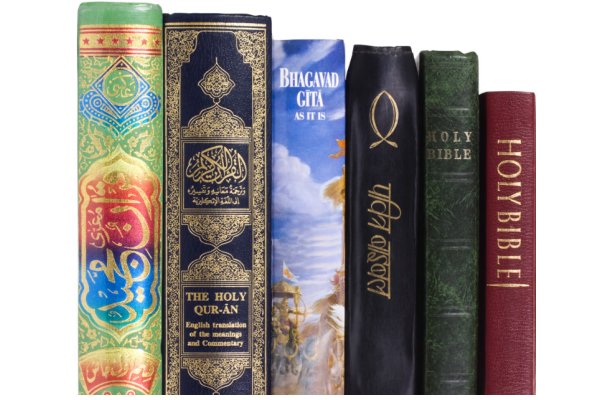
Holy books are not history. Holy books are written by men (which explains a huge deal ...) to reinforce their beliefs. Many of them have been subtly (and not so subtly) altered over time to overcome inconsistencies and to further "prove" what needs to be proved.
During the latest invasion of Lebanon by Israel, the only person reporting from on the ground was Craig Murray, a retired British diplomat (he rose to the rank of ambassador) who is now a very active human rights activist. Craig went to places the BBC, and even Channel 4, failed to go. (Earlier, during Israel's destruction of Gaza, he was prevented from going there or to the West Bank.)
While in Lebanon he made friends with many local Christians and Muslims and, though not actively religious himself (he describes himself as a monotheist), he was interested in many of the things they told him. Here is one of his posts from January 24th, 2025. (Note: the links concerning the destruction of the shrine have been added by us.)
Learning stuff here
- Jesus, who spoke Aramaic, did not rename Simon as "Peter". He renamed him as "Kepha", Aramaic for rock.
- Simon is actually called "Cephas" by Paul in 1 Corinthians 1:12
- He is revered in Islam as "Simon the Pure".
- Both local Christians and Muslims believe he is buried in Shama, South Lebanon (as opposed to western Christian belief he is buried in Rome).
The 2,000 year old tomb revered as his was deliberately smashed and dug up by the Israelis during the occupation.
You don't have to subscribe to any belief to deplore this vicious act.
I am trying to get there, currently restricted by Lebanese army. Was turned away at final checkpoint on Monday.
We are happy to discuss matters with religious people but we are often staggered at how much they quote their holy books, their "Early Church Fathers", their prophets, their saints, their scholars, their theologians and their authors. We much prefer to hear their words and their arguments rather than a regurgitation of others.
Using words from sources within your own belief system can't help when discussing things with us because we don't accept them. It becomes worse if you don't understand your own sources or you insist that your interpretation of holy books is somehow "right" while the interpretation of others within your religion is "wrong". What yardstick are we supposed to use to judge what is right and what is wrong? Equally important, what yardstick do you use?
Quoting from holy books will, at best, annoy us and, at worst, cause us to end the dialogue.
Flat Earthist arguments
- "The Earth is flat - look at the evidence of your eyes!"
- Flat Earthist holy books say so.
- Flat Earthist theologians say so.
- So, it must be true.
The god assumption
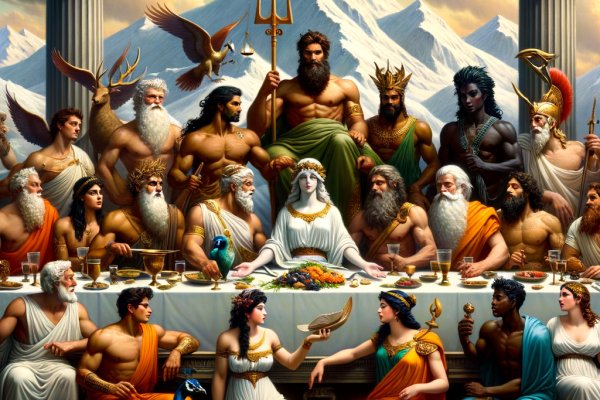
At the risk of upsetting our religious friends, the problem here is that there are so many of them - well over 1,000 at our last count! The pantheon of ancient Greece included over 400 major and minor gods and Hinduism has 33 kopti, supreme divinities, and potentially hundreds of others - it is a matter for doctrinal debate.
The monotheistic religions claim to have only one god but things become complicated when the concept arises of "good" and "bad" gods - Ahura Mazda and Anhgra Mainyu in Zoroastrianism and Yahweh/Allah/God and the Devil/Satan in the Abrahamic religions: Judaism, Christianity and Islam. Christianity further complicates things with talk of a "trinity: god the father, god the son and god the holy sprit" - a single god in three forms.
Obviously we see no need to propose the existence of any gods, we see no evidence for their existence and we reject the idea of all forms of supernatural entity. We are happy to answer the big question of life: how we got here, what happens after death and the purpose of life; without inventing gods.
We are happy to discuss the classic arguments for the existence of gods (we know the arguments off by heart!) but we know from experience that it is a pretty pointless exercise because belief in one or more gods requires "faith", not logical and rational thought. Faith, and the religious practises that go with it, provides meaning to many people's lives - and we have no wish to take that away from anyone.
Where we draw the line is when religious ideas lead to oppression (usually of women, sexual minorities and non-believers), conflict with other religions, violence and even killing. Humanity has not been well served by religions and the history of massacres, by one religious group against another or one sect against another, is very depressing. One that recently came to our attention was the massacre of 60,000 Christians by 26,000 Jews near the Mamilla Pool outside Jerusalem in 614.
So, when debating with us, please avoid the god assumption - it doesn't help and it doesn't move things on.